-
-
-
P.O. Box 1277, Morogoro
Mwanza Cathedral Catholic Church-Drip Irrigation Installation Project
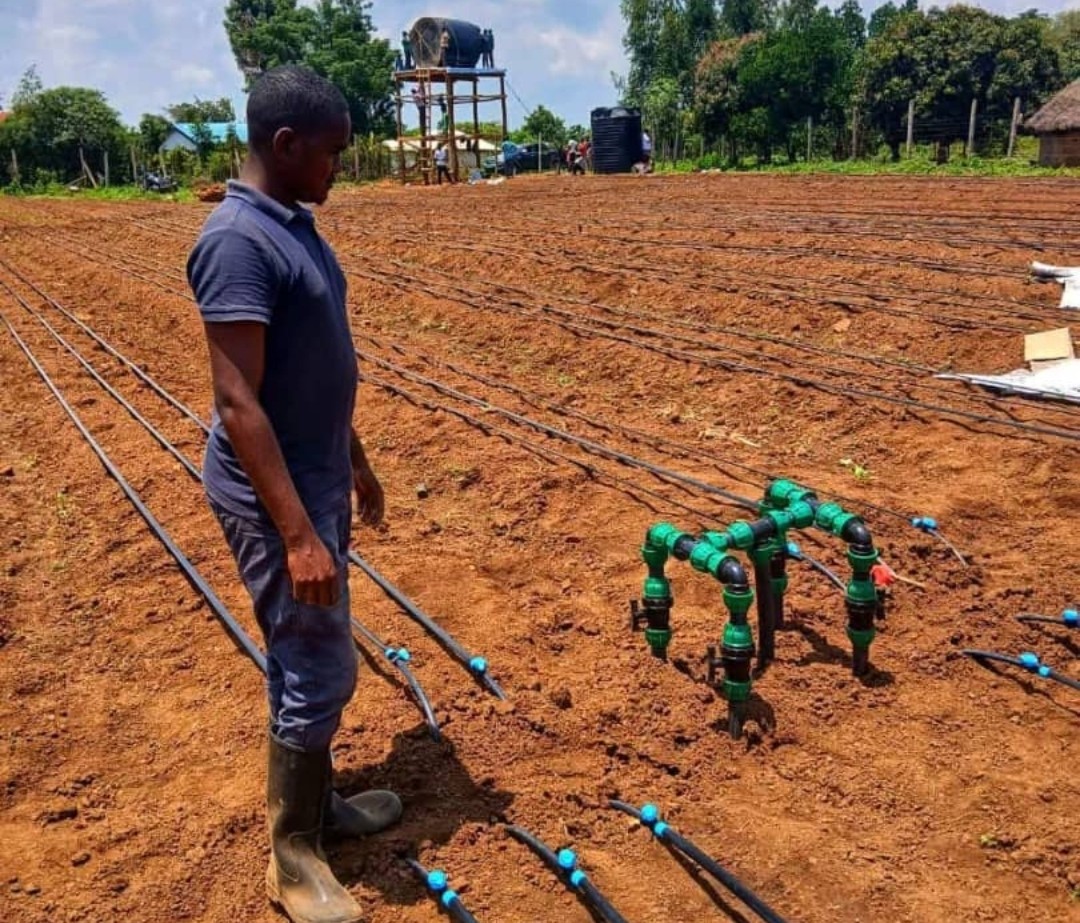
Mwanza Cathedral Catholic Church-Drip Irrigation Installation Project
Project Description
This project involved the supply and installation of a complete drip irrigation system covering a 5-acre agricultural farm owned by the Mwanza Cathedral Catholic Church in Magu District, Mwanza Region. The main objective was to enhance water-use efficiency, improve crop productivity, and support sustainable agricultural production on church-owned farmland. The intervention included the provision of high-quality drip irrigation materials and professional installation services to ensure optimal water distribution across the entire farm. The system was designed to support efficient irrigation scheduling, reduce water wastage, and improve crop growth uniformity under semi-arid conditions.
Project Phases and Key Components
The projected designed to cover phase 1, phase 2, phase 3, phase 4, phase 5 and phase 6
Phase 1
Supply of Drip Irrigation Materials. Complete drip irrigation materials were supplied, including mainlines, sub-lines, emitters, connectors, filtration units, and other accessories required for system installation.
Phase 2
Site Assessment and System Design. A site assessment was conducted to evaluate land conditions, water availability, and crop requirements, followed by the design of a suitable drip irrigation system for 5 acres of farmland.
Phase 3
Instalation of Main and Water Supply Network. Main water supply pipes and distribution lines were installed to ensure efficient movement of water from the source to different sections of the farm.
Phase 4:
Laying of Drip Lines and Emitters. Drip lines and emitters were laid across the farmland to provide controlled and uniform water delivery directly to crop root zones.
Phase 5
installation of Filtration and Pressure Regulation. Systems. Filtration units and pressure regulators were installed to remove impurities, maintain proper water pressure, and protect the irrigation system from blockage or damage.
Phase 6
System Testing and Calibration. The entire irrigation system was tested and calibrated to confirm proper water flow, uniform distribution, and optimal operational performance before full use.
Project Achievements
1. Successfully Installed Drip Irrigation System
A fully functional drip irrigation system was installed across 5 acres of farmland. The system now supports efficient and reliable water distribution for crop production.
2. Improved Irrigation Efficiency
The irrigation system significantly reduced water wastage during farming operations. Water is delivered directly to the plant root zones for maximum efficiency.
3. Enhanced Crop Growth Consistency
Controlled water application improved uniform crop growth across the farm. This contributed to healthier crops and better overall farm productivity.
4. Increased Year-Round Production Potential
The availability of irrigation supports farming activities throughout different seasons. This increased the farm’s potential for continuous crop production year-round.
5. Strengthened Sustainable Agriculture Capacity
The project improved the church farm’s ability to practice sustainable agriculture. Efficient use of water and modern irrigation methods support long-term farm productivity.
Project Impacts
The project significantly improved agricultural productivity and resource efficiency on the Mwanza Cathedral Catholic Church farm. It enabled the transition from traditional irrigation methods to modern, water-efficient drip irrigation technology. As a result, the farm became more resilient to rainfall variability and better positioned for commercial and subsistence crop production. Additionally, the project contributed to promoting climate-smart agriculture practices in Magu District by demonstrating the effectiveness of precision irrigation systems in reducing water consumption while improving yields.
Strategic Importance
This project demonstrated strong technical capacity in the design and implementation of large-scale drip irrigation systems for institutional farms. It highlighted the importance of modern irrigation technologies in improving agricultural efficiency, particularly in areas facing water scarcity or irregular rainfall patterns. The project also strengthened collaboration between agricultural service providers and faith-based institutions engaged in farming activities.
Lessons and Future Opportunities
The project revealed that drip irrigation systems significantly improved water-use efficiency and crop performance when properly designed and maintained. However, it also emphasized the need for continuous farmer training on system operation, maintenance, and scheduling to maximize benefits. Future opportunities identified included integrating fertigation systems to allow for precise application of fertilizers through irrigation lines. There is also potential for scaling similar irrigation solutions to other church-owned farms and community agricultural projects, as well as incorporating solar-powered pumping systems to further reduce operational costs.